
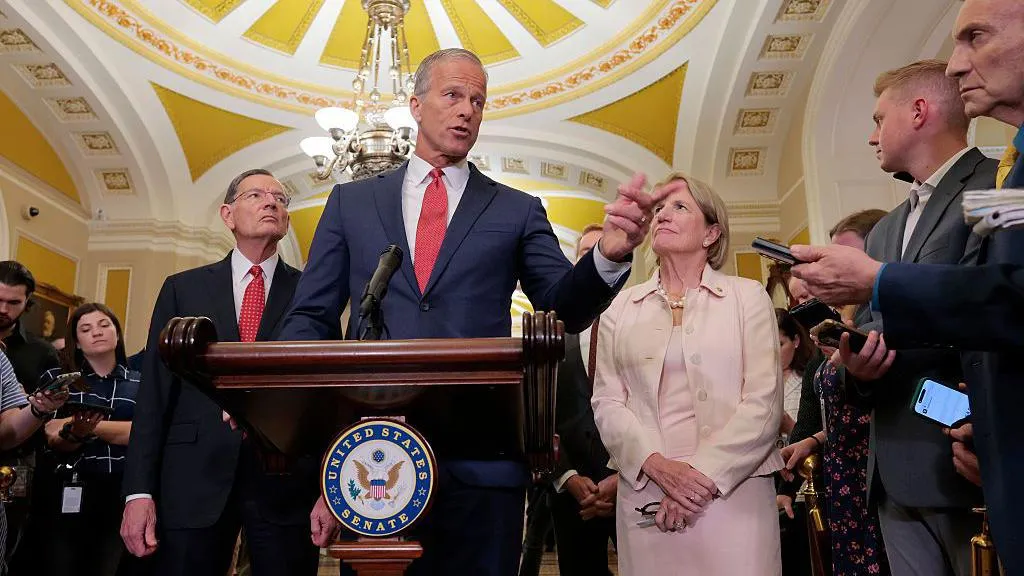
The US Senate engaged in a lengthy voting session overnight on a comprehensive budget bill crucial to President Donald Trump’s policy goals. The One Big Beautiful Bill Act, a nearly 1,000-page legislation, involves increased funding for border security, defense, and energy production, balanced by cuts to healthcare and food assistance programs. The bill’s future is uncertain as Republican lawmakers, divided on welfare program reductions to extend tax breaks, continue discussions. If passed in the Senate, the bill will proceed to the House of Representatives for a final vote before reaching Trump for approval. During a marathon session, senators debated various amendments, voting on each individually in a process known as “vote-a-rama,” which has spanned over 22 hours thus far. As the Senate nears a decision, Vice-President JD Vance’s potential tie-breaking vote looms large, with Republicans needing to limit defections to three for the bill to pass. Critics, including Elon Musk, have voiced concerns over the bill’s impact on government spending and the national debt, which stands at $36 trillion, with projections indicating a $3.3 trillion increase if the bill is enacted. Proposed cuts in the bill could result in millions losing health insurance coverage, sparking debates on the balance between welfare program reductions and tax breaks. Despite opposition from Democrats, amendments seeking to address cuts to healthcare services and food assistance were voted down along party lines. Republican dissent within the Senate, exemplified by Senators like Thom Tillis and Rand Paul, underscores the internal divisions over the bill’s provisions and its implications. Should the bill secure Senate approval, it will return to the House for a final vote, with potential challenges from fiscal conservatives within the Republican Party threatening its passage. Amidst uncertainties, the White House remains optimistic about the bill’s prospects, anticipating Trump’s signature by July 4th, while Musk hints at forming a new political party if the bill becomes law, further straining his relationship with Trump.
The US Senate engaged in a marathon session debating a crucial budget bill, pivotal to President Trump’s agenda, with divisions over welfare cuts and tax breaks threatening its passage.