
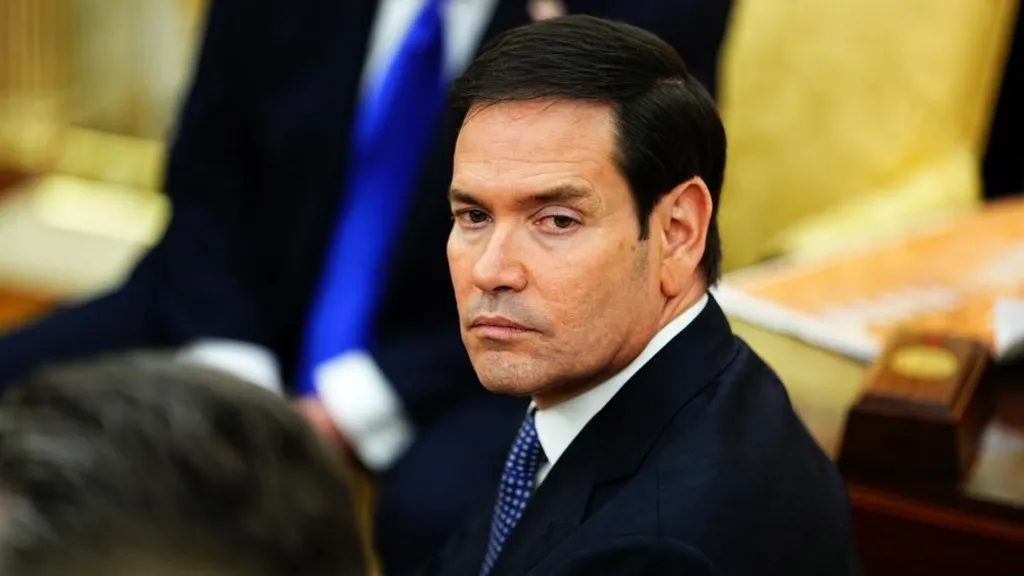
The US secretary of state, Marco Rubio, expressed strong opposition to Israel’s parliament moving towards annexation of the occupied West Bank, stating that such a move would jeopardize Washington’s efforts to resolve the conflict in Gaza. Rubio’s remarks came before his visit to Israel as part of US initiatives to support a fragile ceasefire agreement. In what seemed to be an attempt to challenge Israel’s prime minister, right-wing politicians in Israel passed a preliminary approval for a bill that would grant Israel the authority to annex the West Bank. However, this symbolic gesture drew criticism from US Vice-President JD Vance, who described it as a “very stupid political stunt” and emphasized that the Trump administration’s policy is against the annexation of the West Bank. Despite the symbolic vote in Israel, the US officials reiterated their stance against annexation, emphasizing that it would not align with their peace efforts. The Palestinians consider the West Bank, which has been under Israeli occupation since 1967, as part of their envisioned independent state. While Prime Minister Benjamin Netanyahu has previously voiced support for annexation, he has refrained from advancing it to avoid straining relations with the US and Arab nations that have recently established ties with Israel. The bill for annexation, proposed by non-governmental MPs, narrowly passed in the Israeli parliament, raising uncertainties about its future approval. The Palestinian foreign ministry condemned the move by the Knesset, asserting that Israel would not have sovereignty over Palestinian lands. The international community, including the UN, considers Israeli settlements in the West Bank illegal under international law. As Rubio visited Israel, he reiterated the US opposition to annexation, labeling it as “counterproductive” and a threat to the peace process. His trip follows recent visits by US officials as part of efforts to advance talks on the second phase of a Gaza peace plan proposed by the Trump administration. The first phase of the peace plan, involving a ceasefire and humanitarian aid, has been implemented successfully despite occasional breaches by both Israel and Hamas. Rubio and Vance expressed optimism about maintaining the ceasefire and moving forward with the plan, which aims at establishing an interim government in Gaza, deploying a stabilisation force, and disarming Hamas. The conflict in Gaza, which began with a Hamas-led attack on southern Israel, has resulted in significant casualties on both sides. The ongoing efforts by the US to mediate and advance peace talks reflect the complex dynamics of the region and the challenges involved in reaching a lasting resolution.