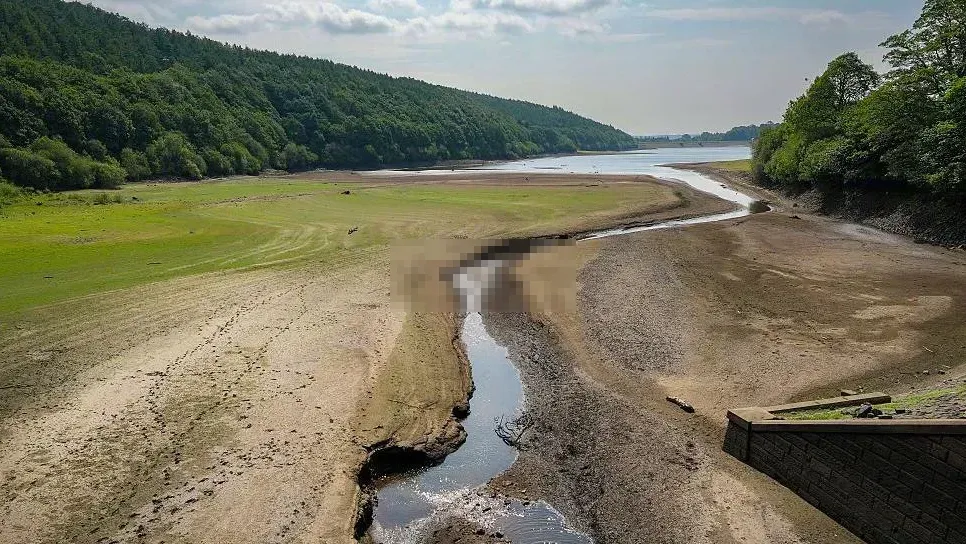
Residents in north-west England and Yorkshire have been officially declared to be in a state of drought by the Environment Agency, with other regions in England possibly facing the same situation if the dry weather persists. Water companies in eastern Scotland and parts of Wales are also reporting low water levels, indicating a widespread issue across the UK. The impact of drought extends beyond just water scarcity, affecting farmers’ crop production, harming nature, and requiring changes in water usage habits. The UK experienced one of the driest springs on record this year, with significantly low rainfall levels between March and May. This lack of rainfall has resulted in diminished water sources like rivers, reservoirs, and groundwater. While there was slightly more rainfall in June, the forecast indicates drier conditions for much of July and possibly August, posing an increased risk of drought in the coming months. River monitors show below-normal flow rates at many monitored sites across the UK, with some experiencing exceptionally low flows.
With drought conditions declared in parts of the UK, farmers face increased irrigation costs and wildlife habitats suffer, highlighting the urgent need for climate resilience and water management strategies.